 ALEEF
ALEEFAdopting a cat or a dog in Morocco: where and how
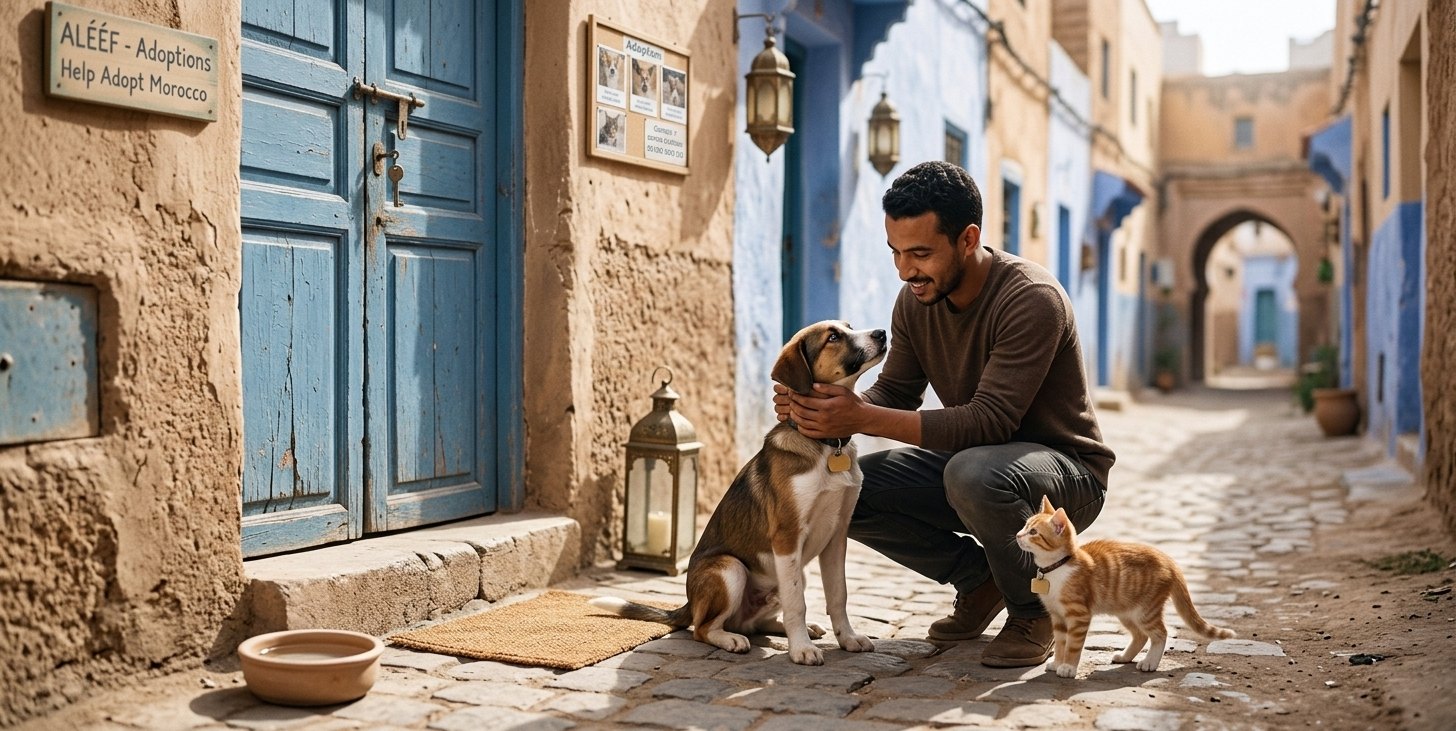
A gaze that follows you from behind a fence, a little ball of fur that comes to rub against your ankle in an alley of the medina… In Morocco, adoption stories often begin like this: with an encounter. Adopting is not only about giving an animal a roof. It is about turning a life of survival into a life of tenderness — and letting yourself be transformed in return.
Why adopt rather than buy
The issue of stray animals is visible everywhere in Morocco, in cities as well as in the countryside. Cats and dogs left to fend for themselves breed quickly, and the cycle of abandonment repeats itself litter after litter. Adopting an animal from a shelter or an association is a concrete way to act on this problem: every spot freed up allows another animal to be saved.
It is also a responsible choice. Animals put up for adoption by serious organizations are usually already spayed or neutered, vaccinated and socialized. You know who you are welcoming, with their character and their history — far from the impulse purchases that sometimes end in yet another abandonment.
Where to adopt in Morocco
Several options exist, depending on your city and the type of animal you are looking for.
Shelters and associations
These are the most reliable contacts, because they follow the animals medically before adoption. A few well-known organizations:
- SPANA Morocco (Society for the Protection of Animals and Nature): present in particular in Casablanca (Aïn Jemaa), Rabat and Marrakech, offering veterinary care and awareness efforts.
- Comme Chiens et Chats: based in Casablanca, it rescues cats and dogs from the streets, cares for them and rehomes them through a network of foster families (Rabat, Casablanca, Essaouira).
- Le Chat Rouge in Marrakech: dedicated to cats, it provides feeding, spaying/neutering, care and adoptions.
- The Help Adopt Morocco shelter in Marrakech: more than 200 dogs and cats, an infirmary, spaying/neutering and adoptions.
Other local associations are active in every region. The best reflex: look for those near you and check their contact details directly.
Community adoptions
Many animals never pass through a shelter: they are rescued by individuals, foster families or neighbors looking to rehome them. These “hand-to-hand” adoptions are precious, provided you ask the right questions: is the animal spayed or neutered? vaccinated? has it seen a vet?
The process and what to expect
Adopting is not a trivial act, and that is a good thing. Here are the main steps.
The adoption file
Serious associations often ask for a short form, sometimes a phone call or a visit. The goal is not to judge you, but to make sure the animal will not face another abandonment.
Spaying/neutering, vaccines and costs
Most animals are handed over already spayed or neutered and vaccinated. A contribution to costs may be requested: it covers the care already provided and helps the association save others. Then plan for a regular budget: food, vaccine boosters, parasite treatments, and the unexpected health issues.
A long-term commitment
A cat easily lives 15 years, a dog often more than 10 years. It is a companion for a good part of your life: travel, moves, changes of pace… everything is now planned as a pair.
The first days at home
Arrival is a huge upheaval for the animal, especially if it comes from the street or a noisy shelter. A few markers to start off well:
- Create a safe corner: a quiet room, with water, food, a bed and — for a cat — a litter box set apart.
- Give it time: do not force it out of its hiding place. Trust is built over days, sometimes weeks.
- Plan a veterinary check-up: even for an animal that is already followed medically, a visit in the first few days lets you take stock and answer your questions.
- Set up a routine: meal times, walks for the dog, playtime. Regularity is reassuring.
There will be mishaps, perhaps a chewed shoe or a restless night. That is normal. The patience of the first days lays the foundations of a bond that will last for years.
Ready to welcome a new companion?
On ALEEF, the community and the Lost & Found space bring together adoption listings and mutual help between enthusiasts near you. The geolocated directory helps you find a vet for the first check-up, and the health record lets you start off right: vaccines, spaying/neutering, boosters, everything is centralized.
Discover ALEEF Explore the directoryAdopting means opening a door
Whether you choose a playful kitten or an old dog with gentle eyes, you are not “taking” an animal: you are becoming its refuge. And in a country where so many animals are still waiting for their chance, every adoption counts double. Do your research, take your time, and let the encounter do the rest.
The contact details, availability and procedures of associations change: always check them locally before travelling. For the health of the adopted animal, consult a vet — this article does not replace professional advice.
Sources: SPANA Morocco (Society for the Protection of Animals and Nature), spana.org.ma — Casablanca Aïn Jemaa, Rabat, Marrakech; Comme Chiens et Chats, Casablanca (foster family network Rabat/Casablanca/Essaouira); Le Chat Rouge, Marrakech, lechatrouge.org (spaying/neutering, adoption); Help Adopt Morocco shelter, Marrakech, helpadoptmoroccananimals.org (200+ animals, spaying/neutering).