 ALEEF
 Prevention
7 kitchen foods that are toxic to your dog
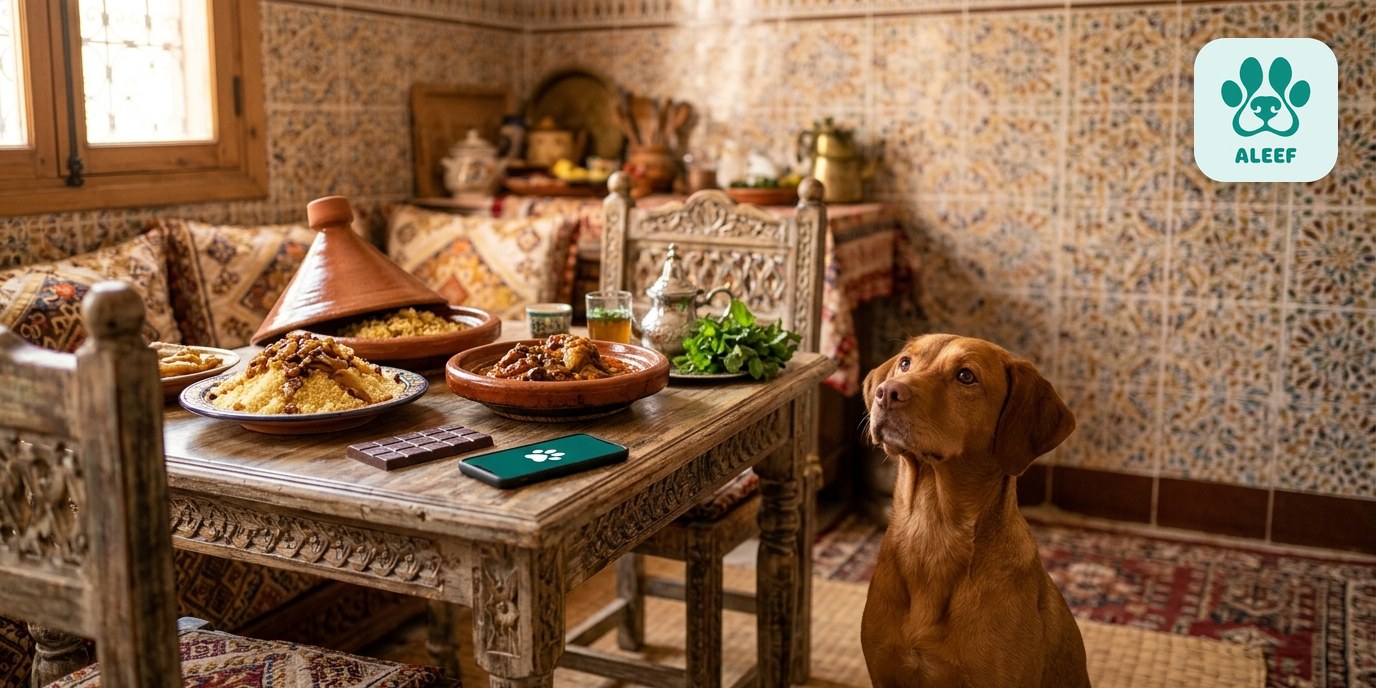
The most dangerous foods for a dog are often the most ordinary: chocolate, xylitol, coffee and tea, avocado, macadamia nuts, onion and garlic, and raisins. Some act within minutes, others over several days. The seventh is found in many Moroccan festive dishes.
What are the 7 most dangerous foods?
1. Chocolate: why is dark the worst?
Chocolate contains theobromine and caffeine, which dogs eliminate very slowly. According to the Merck Veterinary Manual, first signs (vomiting, diarrhoea, thirst) appear around 20 mg/kg, heart effects around 40–50 mg/kg and seizures above 60 mg/kg. Dark chocolate contains about 5.5 mg per gram, milk chocolate 2.3 mg and baking chocolate 15.5 mg.
2. Xylitol: the hidden sweetener
Found in some "sugar-free" gums, sweets and toothpastes, xylitol causes a sharp drop in blood sugar. The Merck Veterinary Manual puts this risk at 0.1 g/kg, with possible signs within 30 minutes (weakness, tremors, seizures), and liver damage above 0.5 g/kg. For a 10 kg dog, a single gram is enough.
3. Coffee and tea: watch the teapot leftovers
The caffeine in coffee and tea acts like that in chocolate: agitation, racing heart, sometimes seizures, even in small amounts according to Royal Canin. Used tea leaves, coffee grounds or a glass of tea left on the floor should be kept out of reach.
4. Avocado: mostly the stone and the skin
Persin is concentrated in the stone, skin and leaves of the avocado; it can cause vomiting and diarrhoea. The stone is also a real risk of intestinal blockage. A well-blended avocado juice is not the main issue: the peelings left in the bin are.
5. Macadamia nuts
They cause hind-leg weakness, vomiting, lethargy and tremors. Poisoning is rarely fatal, but it is alarming and warrants a call to the vet. All nuts, being very fatty, can also upset digestion.
6. Onion and garlic: the tagine trap
Raw, cooked or powdered, onion and garlic destroy red blood cells and can cause anaemia. Garlic is 3 to 5 times more toxic than onion, and concentrated forms (powder, dried onion) are most often involved. Signs (tiredness, pale gums, dark urine) often appear only after 3 to 5 days, so people rarely link them to Sunday's tagine leftovers.
7. Raisins: the last one is everywhere in Morocco
Both grapes and raisins can trigger acute kidney failure in dogs. Yet they are everywhere in our cooking: couscous tfaya, pastries, Eid dried-fruit mixes. Sensitivity varies hugely from one dog to another and no dose is recognised as safe: the only rule is never to give any.
My dog ate one of these foods: what should I do?
Note what was eaten, roughly how much and when, keep the packaging, then call a vet without waiting for symptoms. Do not make your dog vomit yourself without professional advice: depending on the product, it can make things worse. The faster the care, the simpler it is.
Frequently asked questions
Is a small square of chocolate serious?
It depends on the type of chocolate and the dog's weight. A square of milk chocolate for a large dog is rarely a problem; dark or baking chocolate for a small dog is. If in doubt, call.
Are bread and msemen dangerous?
They are not toxic as such, but they are fatty and salty: they promote obesity and digestive problems. Raw, risen dough should be avoided.
Read more: recognising a vet emergency and the cost of an emergency consultation in Morocco.
Keep a vet within reach
Find a vet near you today in the ALEEF directory (144 vets listed in 25 cities), and note in the health record what your dog must never eat.
Find a vetDiscover ALEEFGeneral information that does not replace a consultation. If your pet has eaten something toxic, contact a vet immediately: only a vet can assess and treat your animal.
Sources: Merck Veterinary Manual (chocolate, xylitol, Allium); Royal Canin Morocco, "10 toxic foods you shouldn't give your dog"; ALEEF directory (internal data).
Find a pro near you
Vets, groomers, pet sitters: browse the ALEEF directory to find a trusted professional in your city.
Browse the directoryRead next
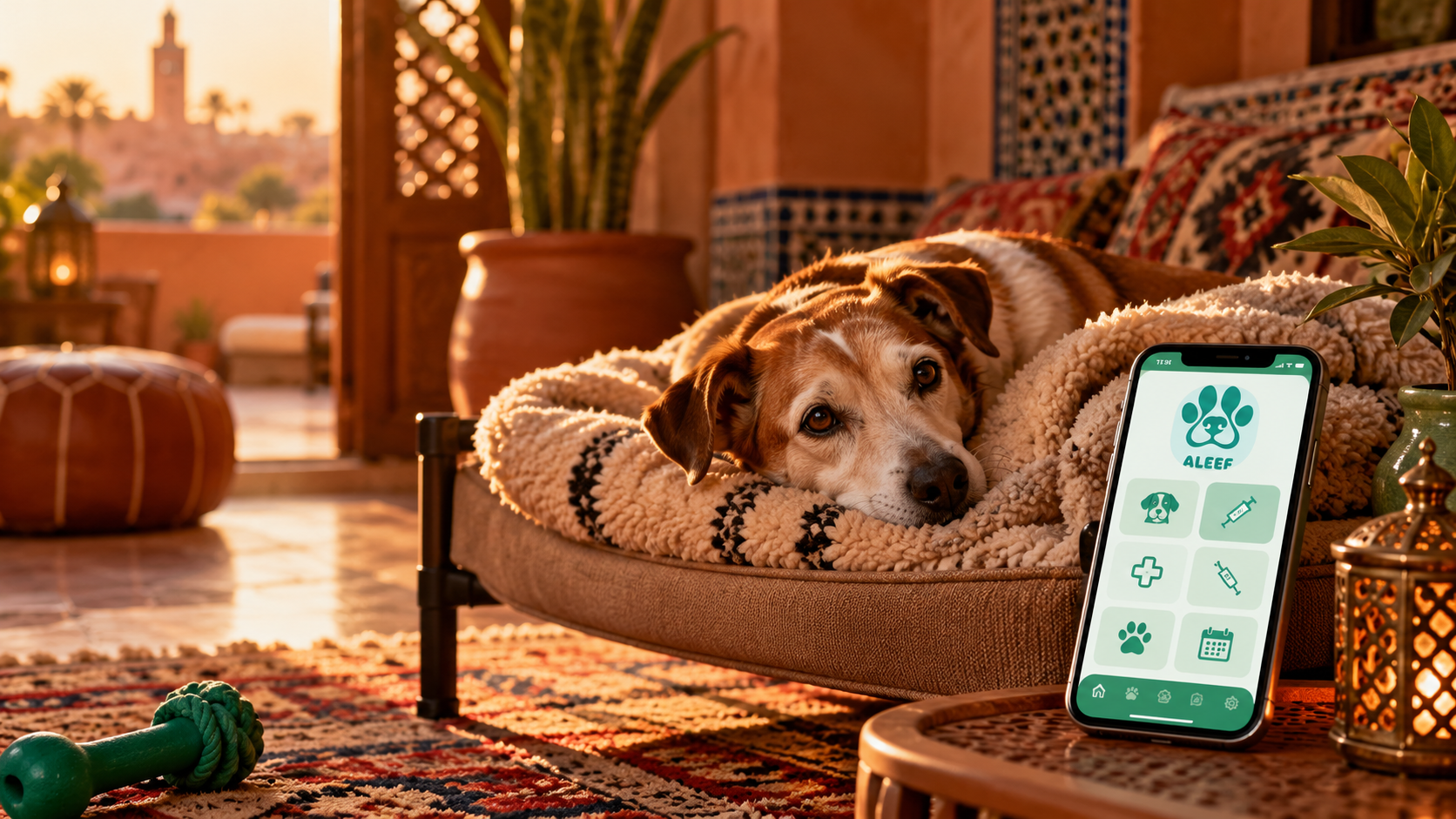
Nights near 10 °C in November in Marrakech: shelter, walks, fragile dogs. Simple tips + log it all in the ALEEF Health Record.
Autumn is peak flea and tick season in Morocco. Signs, treatment and prevention to protect your dog — and log it all in ALEEF.
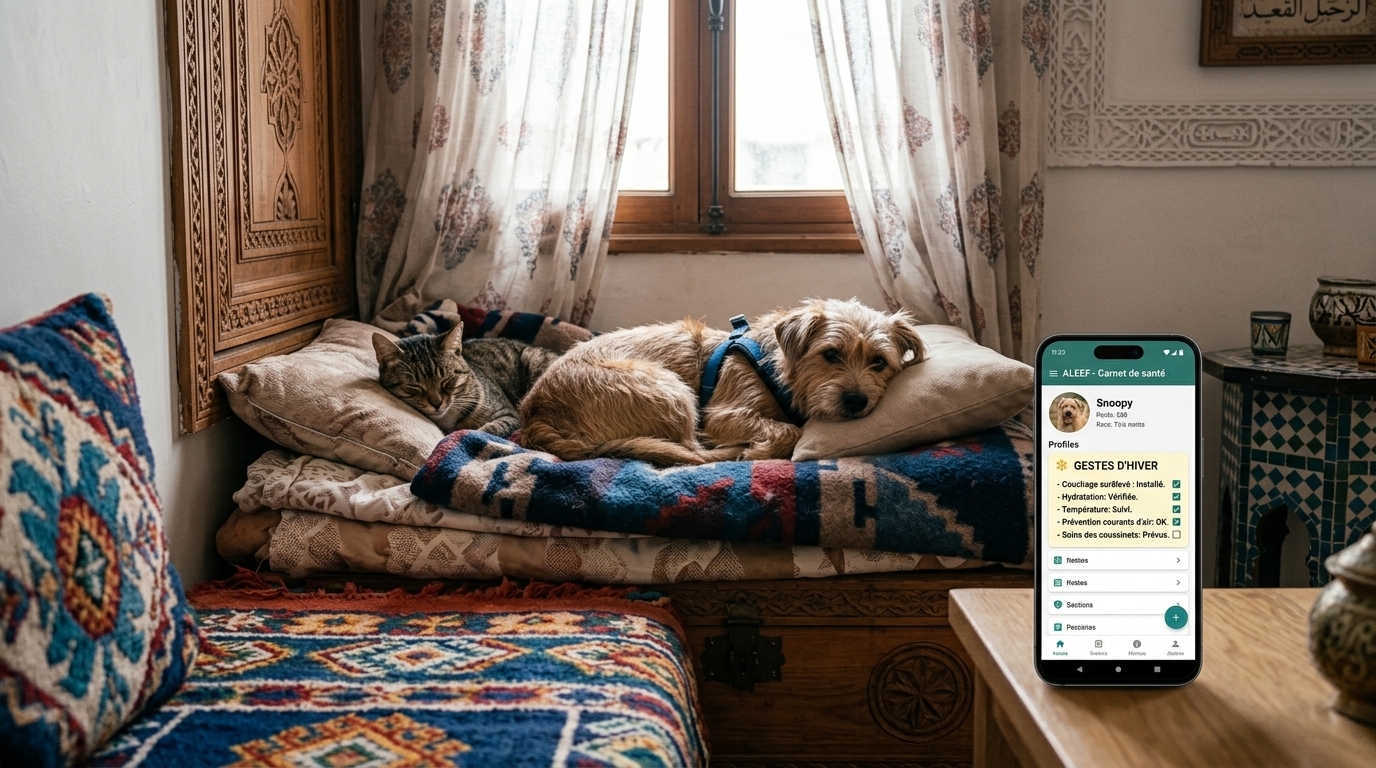
Chilly nights from November: bedding, food, walks. Prepare your pet for the cold and log every step in the ALEEF health record.